


The Philippines has become an attractive destination for foreigners looking to retire, invest in real estate, or purchase a vacation home. With its tropical climate, relatively affordable cost of living, and growing property market, it’s understandable why many foreign nationals are interested in owning property in the country.
But can foreigners legally buy property in the Philippines?
Yes, foreigners can own certain types of real estate in the Philippines, particularly condominium units. However, Philippine law places restrictions on foreign ownership of land.
Understanding these rules is important before making a property investment. This guide explains what foreigners can and cannot own, the available property options, and the important considerations when purchasing real estate in the Philippines.
1. Can Foreigners Own Property in the Philippines?
Yes. Foreign nationals can legally own certain types of real estate in the Philippines, but ownership depends on the type of property.
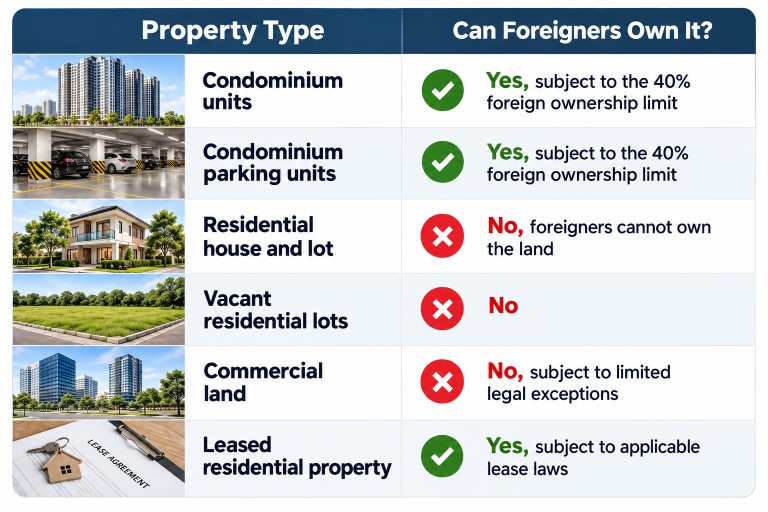
Under the 1987 Philippine Constitution, private land ownership is generally reserved for Filipino citizens and corporations that are at least 60% Filipino-owned.
Here’s a quick overview:
2. Can Foreigners Buy Condominium Units in the Philippines?
Yes. Foreign nationals can purchase and own condominium units in the Philippines.
This is one of the most straightforward ways for foreigners to acquire real estate in the country.
Under Republic Act No. 4726 (the Condominium Act of the Philippines):
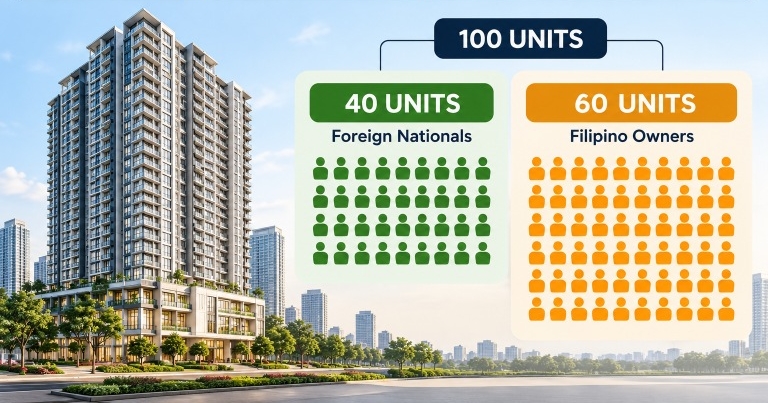
- Foreign Ownership Cap: Foreign ownership in a single condominium project is limited to 40%. The remaining 60% of the units/shares in the condominium corporation must be owned by Filipino citizens or Philippine-owned entities.
- Perpetual Ownership (Absolute Title): Condominium ownership in the Philippines is generally perpetual. When a foreigner buys a condo unit, they receive a Condominium Certificate of Title (CCT) issued by the Land Registration Authority (LRA). This grants full legal title and ownership over the specific unit and an undivided interest in the common areas, which can be inherited, sold, or transferred without an expiration date (unlike leasehold agreements).
- Common Land Ownership: The land beneath the building is owned by the project’s Condominium Corporation, in which unit owners hold appurtenant shares.
Important: Foreign buyers should also understand that owning a condominium unit does not automatically grant permanent residency or citizenship in the Philippines.
Can Foreigners Buy Pre-Selling Condominiums?

Yes. Foreign nationals can purchase pre-selling condominium units. However, buyers should check:
- Whether the project has a valid License to Sell from DHSUD.
- Whether the developer is properly registered.
- Whether foreign ownership allocation is still available.
- The payment schedule and turnover timeline.
- The developer’s track record and completed projects.
3. Can Foreigners Buy Land in the Philippines?
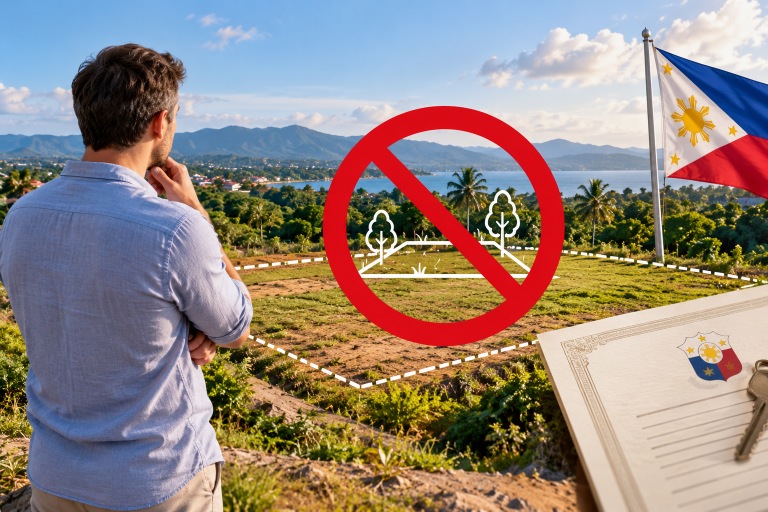
Generally, no.
The 1987 Philippine Constitution restricts foreign nationals from acquiring private land in the Philippines.
This applies to residential, commercial, and vacant lots.
For example, a foreign national cannot directly purchase:
- A residential lot for building a house.
- A vacant lot for future development.
- A house and lot where ownership of the land is included.
- A commercial lot for business purposes.
There are limited exceptions under Philippine law, including certain cases involving former natural-born Filipino citizens and hereditary succession.
What About Buying a House and Lot?
A foreigner cannot directly own the land beneath a house.
However, foreigners may lease land or residential properties under applicable Philippine laws.
For someone who wants to live in a house rather than a condominium, leasing may be a practical alternative.
4. Can Foreigners Buy Land Through Marriage to a Filipino?

Marriage to a Filipino citizen does not automatically give a foreign spouse the right to own land in the Philippines.
For example, if a foreign national marries a Filipino citizen, the Filipino spouse may acquire land in their own name, provided the transaction complies with Philippine law.
However, the foreign spouse does not automatically acquire ownership rights over the land simply because of the marriage.
Property relations between spouses can also be affected by the applicable matrimonial property regime, marriage date, and marriage settlement.
Foreign nationals should seek legal advice before entering into property transactions involving a Filipino spouse.
5. Can Former Filipinos Who Became Foreign Citizens Own Land?
Yes. Former natural-born Filipino citizens who have acquired foreign citizenship may still purchase private land in the Philippines, subject to specific limitations.
Under Republic Act No. 8179 and Batas Pambansa Blg. 185, eligible former natural-born Filipinos may acquire land for residential purposes within the following limits:
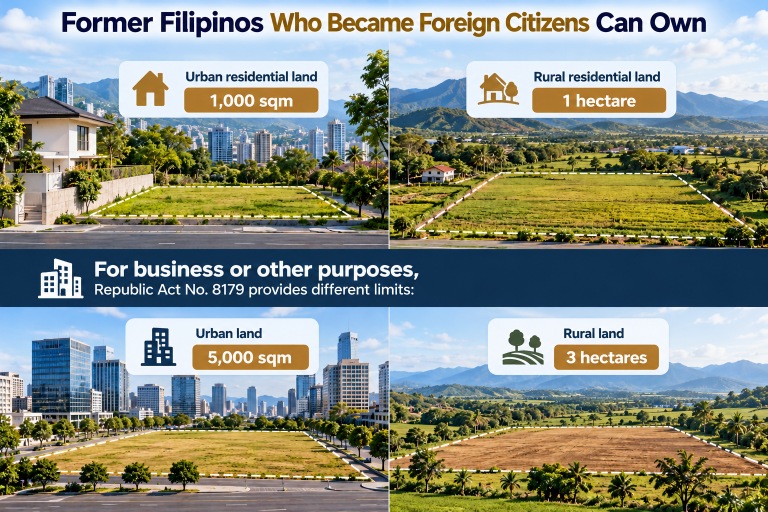
Additional conditions apply, including restrictions on the number and location of lots.
These privileges are specifically for qualified former natural-born Filipino citizens. They do not automatically extend to their foreign spouses or other foreign nationals.
6. Can Foreigners Inherit Property in the Philippines?

Yes, foreigners may acquire private land through hereditary succession, which is a recognized exception under Article XII, Section 7 of the Philippine Constitution.
For example, a foreign national may inherit land from a Filipino parent through legal succession.
However, this exception applies to inheritance, not an ordinary purchase or transfer disguised as inheritance.
The legal requirements depend on the circumstances of the inheritance, the applicable succession laws, and the documents involved. Under Article XII, Section 7 of the Constitution, a foreigner can legally inherit private land only through intestate succession (when a Filipino family member dies without a will and the foreigner is a legal compulsory heir under law).
Foreign beneficiaries should consult a Philippine lawyer to properly process the estate and transfer of ownership.
7. Can Foreigners Lease Land in the Philippines?

Yes. Foreign nationals can lease private land and residential properties in the Philippines, subject to applicable laws.
A lease allows a foreigner to use and occupy a property without owning the land.
For residential purposes, this can be an alternative for foreigners who want to live in a house rather than purchase a condominium.
Can Foreign Investors Lease Land for 99 Years?
Yes, under certain conditions.
Republic Act No. 12252, approved on September 3, 2025, amended the Investors’ Lease Act and allows qualified foreign investors to lease private land for an aggregate period of up to 99 years.
However, this is not a general 99-year residential lease privilege for every foreign national.
The law applies to qualifying foreign investments, subject to requirements such as:
- An approved and registered investment in the Philippines.
- Use of the leased land for the approved investment purpose.
- Compliance with applicable government requirements.
- Other conditions under the law and its implementing regulations.
This provision is particularly relevant to qualified foreign business investors and should not be confused with ordinary residential leasing.
8. Can Foreigners Invest in Philippine Real Estate?

Yes. Foreign nationals can participate in the Philippine real estate market through legally permitted property ownership and investment arrangements.
Some common options include:
Condominium Investments
Foreigners can purchase condominium units for personal use or potential rental income, subject to the 40% foreign ownership restriction.
Commercial Condominium Units
Foreigners may also purchase eligible commercial condominium units, such as office or retail spaces, subject to the applicable ownership rules.
Owning a Building / House on Leased Land
Foreigners can legally own a house or building structure outright. To do this legally:
- You lease the private lot from a Filipino landowner under a long-term contract.
- You build or purchase the house standing on that leased plot.
- Lease Terms: Under the Investor’s Lease Act and standard Civil Code rules, long-term leases are generally granted for 99 years.
Purchasing Land via a 60/40 Filipino Corporation
Foreigners can hold up to 40% equity in a domestic Philippine corporation. Since the corporation is 60% Filipino-owned, it legally qualifies as a Filipino entity and can hold a Transfer Certificate of Title (TCT) for private land.
Caution: The 60% Filipino ownership must be genuine. Using dummy shareholders to bypass restrictions violates the Anti-Dummy Law (Commonwealth Act 108) and is a criminal offense.
9. Important Things Foreign Buyers Should Know Before Purchasing
Before committing to a property purchase, foreign nationals should consider the following:
Verify the Developer and Project

Check the developer’s background, completed developments, and reputation.
For condominium projects, verify the applicable Certificate of Registration and License to Sell issued by DHSUD.
Check Foreign Ownership Availability
Confirm whether the condominium project still has available allocation for foreign buyers under the applicable ownership restrictions.
Understand the Total Purchase Cost

Consider more than the advertised selling price.
Depending on the transaction, additional expenses may include:
- Reservation fees.
- Down payment.
- Documentary Stamp Tax.
- Transfer and registration fees.
- Notarial fees.
- Association dues.
- Real Property Tax.
- Utility connection charges.
Ask the developer or seller for a breakdown of all applicable charges.
Understand the Payment and Financing Terms
Foreign buyers should check whether the developer accepts their preferred payment arrangements.
If financing is required, inquire with Philippine banks about eligibility, income documentation, loan terms, and applicable requirements for foreign nationals.
Do not assume that all banks offer the same financing options to foreign buyers.
Check the Property Documents

Review the property’s title, condominium documents, contract terms, and other relevant legal documents.
For pre-selling properties, carefully review the payment schedule, construction timeline, turnover conditions, and provisions covering delays or cancellation.
Seek Professional Assistance
Consider working with a licensed Philippine real estate broker and a qualified property lawyer.
They can help you understand the transaction, review documents, and identify potential issues before you commit financially.
10. Frequently Asked Questions About Foreign Property Ownership in the Philippines
Can a foreigner own 100% of a condominium unit?
Yes. A foreign national can own 100% of an individual condominium unit, provided the overall foreign ownership limit for the project is not exceeded.
Can a foreigner rent out a condominium in the Philippines?
Generally, yes. Foreign condominium owners may rent out their units, subject to applicable laws, condominium rules, tax obligations, and local regulations.
Does buying a condominium give a foreigner permanent residency in the Philippines?
No. Purchasing property does not automatically grant a visa, permanent residency, or Filipino citizenship. Immigration requirements are separate from property ownership rules.
Can a foreigner buy property in the Philippines while living abroad?
Yes. Foreign nationals can purchase eligible condominium units even if they reside overseas. However, they must comply with the developer’s documentation, identification, payment, and transaction requirements.
Find the Right Property in the Philippines
Buying property in the Philippines as a foreign national is possible, but understanding the country’s ownership restrictions is essential before making an investment.
For most foreign buyers, condominium ownership is one of the most accessible ways to acquire real estate in the country. It offers opportunities for personal use, retirement, vacation living, and potential rental income.
At YourHome.ph, we help buyers explore residential condominium developments and understand their property options in the Philippines.
Whether you’re looking for a place to retire, a vacation property, or a potential real estate investment, we’re here to help you explore available properties and make a more informed decision.
Explore properties in the Philippines at YourHome.ph.
Legal references
These are the primary sources supporting the article:
Supreme Court ruling on foreign land ownership
1987 Philippine Constitution – Article XII
Republic Act No. 4726 – Condominium Act
Republic Act No. 8179 (the Foreign Investments Act)
Republic Act No. 12252 (The Lease of Private Lands by Foreign Investors)



Tags