


Navigating the Philippine real estate market can feel like learning a new language. Whether you are a first-time homebuyer, an investor, or an Overseas Filipino Worker (OFW) purchasing property back home, understanding real estate terminology is essential.
From property ownership and legal documents to financing, taxes, and professional services, this guide explains the terms you need to know before buying, selling, or investing in real estate in the Philippines.
Basic Real Estate Terminology
Real Estate refers to land and anything permanently attached to it, including houses, buildings, and other improvements.
Real Property refers to land and improvements, together with the ownership rights associated with them.
Listing refers to a property being offered for sale or lease and advertised to potential buyers or tenants. It may include property details such as location, price, floor area, lot area, and other relevant information.
Property Due Diligence is the process of verifying a property’s legal, technical, and financial status before purchasing it. This may include checking the title, tax records, property boundaries, zoning, and developer permits.
Ocular Inspection is a physical visit to inspect a property, its surroundings, accessibility, condition, and other relevant features.
Open House is an event where potential buyers can view a property without arranging individual appointments.
Appraisal is a formal assessment conducted by a licensed Real Estate Appraiser (or bank appraiser) to establish the current fair market value of a property. Financial institutions base their maximum approved loan amount on the appraised value, not necessarily the seller’s listing price.
Joint Venture (JV) is a business arrangement where parties collaborate on a project, often involving a landowner and a developer sharing responsibilities, risks, and profits.
Property Types
House & Lot Unit Types
Single Detached: A standalone house surrounded by open yard space on all four sides (front, back, left, right). Offers maximum privacy and customization potential at a higher price point.

Single Attached: A home built on one side of the lot boundary, sharing one firewall with an adjacent property while leaving open space on the remaining three sides.

Townhouse: A multi-storey unit built in a row structure, sharing side firewalls with units on both sides (except for end units, which share only one wall). Townhouses maximize floor area on smaller land footprints.

Duplex: A single structural building split into two separate housing units side-by-side, sharing a central firewall with independent entry points and separate land titles.

Other Property Types
Condominium is a property where individual units are privately owned and common areas are jointly owned or managed.
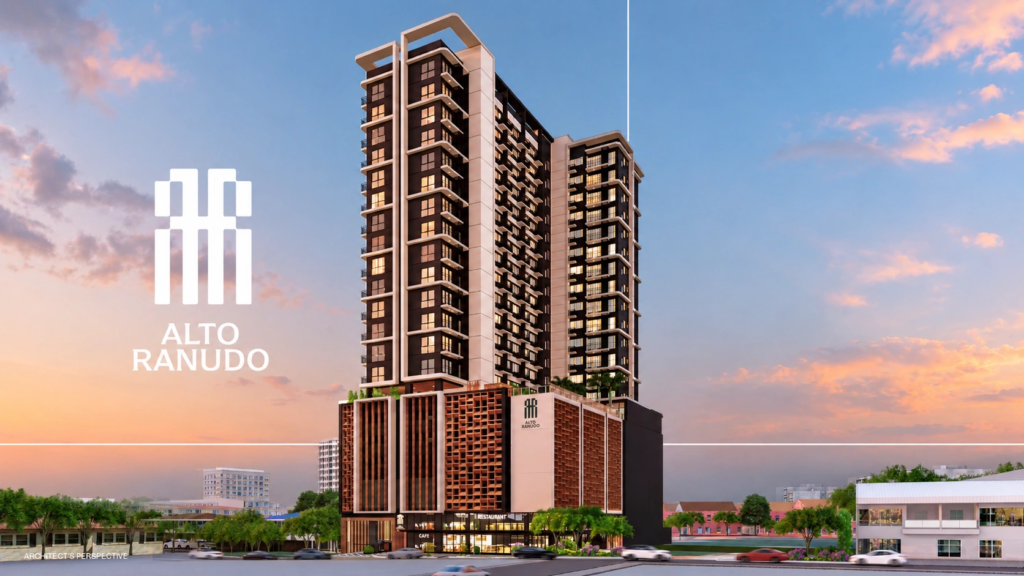
Commercial Property refers to property used for business activities, such as offices, retail spaces, warehouses and commercial buildings.
Industrial Property refers to property used for manufacturing, warehousing, logistics, and similar industrial activities.
Mixed-Use Development combines different property uses, such as residential, commercial, office, and retail spaces, within one development.
Property Classifications
Pre-Selling Property is a property sold before construction is completed or before it is ready for occupancy. These properties offer lower introductory prices and flexible equity payment structures, though move-in takes 2 to 5 years.
Ready-for-Occupancy (RFO) refers to properties that are fully constructed and immediately available for residents to move in.
Resale Property is a property previously owned by another individual or entity and offered for sale again.
Unit for Assume / Pasalo refers to a property being transferred from an existing buyer to a new buyer, who may pay an agreed amount for the existing buyer’s equity and assume remaining obligations, subject to required approvals.
Rent-to-Own (RTO) is an arrangement where a tenant may purchase the property under agreed conditions, sometimes applying a portion of rent toward the purchase price.
Forfeiture is the loss of property rights under certain contractual conditions. Applicable buyer protections and refund rights must be considered.
Buying and Selling Terms
License to Sell (LTS) is a permit issued by DHSUD for qualifying subdivision lots and condominium units offered for sale.
Earnest Money is a deposit demonstrating a buyer’s good-faith intention to purchase a property. Under Article 1482 of the Civil Code, earnest money generally forms part of the purchase price and serves as evidence of the perfection of a sale.
Reservation Fee is an initial payment made to reserve a property. It is commonly credited toward the purchase price, subject to the reservation agreement.
Down Payment (DP) is the initial amount paid toward the property’s purchase price.
Equity is the portion of the purchase price that the buyer must pay using personal funds rather than a housing loan.
Mortgage is a loan agreement where a bank, financial institution, or Pag-IBIG Fund lends capital to purchase real estate, using the property itself as loan collateral.
Loan Term is the period agreed upon for repaying a loan.
Loan-to-Value Ratio (LTV) is the percentage of a property’s value that a lender is willing to finance.
Monthly Amortization The regular monthly payment made to pay off a home loan or equity balance over a set schedule, covering both loan principal and interest.
Fixed Interest Rate is an interest rate that remains unchanged for a specified period.
Mortgage Redemption Insurance (MRI): Mandatory insurance required by banks and Pag-IBIG. In the event of the borrower’s death or permanent disability during the loan tenure, the MRI settles the remaining loan balance so the family retains the property debt-free.
Total Selling Price is the base price of the real estate property itself (the house and lot, raw land, or condominium unit) not including the taxes and charges.
Total Contract Price (TCP) is the total purchase price of the property. Always check if the TCP is net or gross of taxes, processing fees, and utility connection charges.
Turnover is the formal handover of a completed property to the buyer.
Pre-Approval is an initial assessment by a lender indicating the amount a borrower may qualify to borrow. It is not a guarantee of final loan approval.
Condominium Dues are charges collected from condominium unit owners for maintaining common areas and shared facilities.
HOA Dues are payments collected from homeowners to fund the maintenance and operations of a residential community.
Transaction & Purchase Process Documents
Letter of Intent (LOI) / Offer to Purchase is a preliminary document showing the buyer’s formal interest in buying the property, stating the proposed price, deposit, and terms.
Authority to Sell (ATS) is a written legal document from a property owner that permits a licensed real estate broker to market, promote, and negotiate the sale of a property.
Reservation Agreement is a contract that pulls the property off the market while you prepare the funds or loan applications; requires a reservation fee.
Special Power of Attorney (SPA) authorizes a representative to perform specified legal acts on behalf of another person. It is commonly used by OFWs who need someone in the Philippines to handle property transactions.
Contract to Sell (CTS) is a bilateral agreement where the seller promises to transfer ownership to the buyer only after full payment of the agreed price (often used for installment or pre-selling properties).
Deed of Absolute Sale (DOAS) is the final notarized contract transferring absolute ownership from the seller to the buyer after full payment has been settled.
Letter of Guarantee (LOG) is a written commitment issued by a bank or financial institution stating they will release the loan proceeds to pay for the remaining balance of the property.
Affidavit is a written statement of facts made under oath.
Deed of Quitclaim is a document through which a person releases or relinquishes a claim or interest in a property. Its legal effect depends on the circumstances and wording of the document.
Property Ownership and Legal Documents
Original Certificate of Title (OCT) is the original land title issued when a property is first registered under the Torrens system.
Transfer Certificate of Title (TCT) is issued when ownership of a titled property is transferred to a new owner.
Condominium Certificate of Title (CCT) is the title issued for an individual condominium unit, including the applicable undivided interest in common areas.
Certificate Authorizing Registration (CAR / eCAR ) is issued by the Bureau of Internal Revenue (BIR), this certificate proves that all required taxes for the property transfer have been settled. Without an eCAR, the Registry of Deeds will not transfer the title to your name.
Tax Declaration is a local government document used for real property taxation. It is not equivalent to a certificate of title and does not, by itself, establish ownership.
Encumbrances and Government Rights
Encumbrance is a legal claim, burden, or restriction affecting a property’s title or use.
Lien is a legal claim against a property securing a debt or obligation, such as a mortgage or tax lien.
Lis Pendens is a notice on a property’s title indicating that the property is involved in pending litigation.
Encroachment occurs when a structure, fence, or other improvement extends beyond its legal boundary onto neighboring property or public land.
Eminent Domain is the government’s power to acquire private property for public use, subject to the constitutional requirement of just compensation.
Property Valuation
Fair Market Value (FMV) is the estimated price a property would sell for between a willing buyer and seller in an open market.
Zonal Value is a valuation set by the BIR for specific geographic areas and used in determining certain property taxes.
Assessed Value is the value assigned by the local government for real property taxation.
Highest and Best Use is an appraisal principle identifying the most legally permissible, physically possible, financially feasible, and productive use of a property.
Depreciation is the decline in a property’s value or usefulness over time due to wear and tear, age, or other factors.
Real Estate Taxes
Capital Gains Tax (CGT) is a tax generally imposed on the sale of real property classified as a capital asset.
Documentary Stamp Tax (DST) is a tax imposed on certain documents and transactions, including real property sales.
Transfer Tax is a local tax imposed on the transfer of real property ownership.
Real Property Tax (RPT) is the annual tax imposed by local governments on land, buildings, and other taxable improvements. It is also commonly called amilyar.
Estate Tax is a tax imposed on the transfer of a deceased person’s estate to their heirs.
| Tax | Rate | Who pays? |
|---|---|---|
| Capital Gains Tax (CGT) | 6% | Usually Seller |
| Documentary Stamp Tax (DST) | 1.5% | Usually buyer by agreement; parties signing the deed may be legally liable |
| Local Transfer Tax | Up to 0.5% in provinces, 0.75% in cities | Seller under the Local Government Code, although commonly shouldered by buyer by agreement |
| Value-Added Tax (VAT) | 12%, when applicable | Seller collects and remits to BIR, usually passed on to buyer |
| Expanded Withholding Tax (EWT/CWT) | Varies | Buyer generally withholds and remits on behalf of seller when applicable |
| Real Property Tax (RPT) | Up to 1% in provinces, 2% in cities, plus applicable SEF levy | Property owner or legally responsible person |
| Estate Tax | 6% of net taxable estate | Estate of the deceased, through its executor or administrator |
Estate Tax Amnesty refers to a government relief program allowing qualified estates to settle estate tax liabilities under special conditions.
Important notes for accuracy
- CGT is not always applicable. A developer selling condominium units, for example, generally deals with ordinary asset taxation rather than the 6% CGT applicable to capital assets.
- Not all taxes are paid by the buyer. The parties may agree on how transaction expenses are allocated, but their agreement does not automatically change statutory tax liability.
- RPT and estate tax are different from transaction taxes. RPT is recurring, while estate tax arises from the transfer of property upon death.
Ownership and Marital property
Conjugal Property refers to property subject to the applicable marital property regime. The default regime for marriages celebrated after the Family Code took effect is generally Absolute Community of Property, unless an exception applies or a valid marriage settlement provides otherwise.
Perpetual Ownership generally refers to ownership without a fixed expiration date. However, ownership remains subject to applicable laws, restrictions, and the property’s legal status.
Financial Terms & Financing Options
In-House Financing is financing provided directly by a property developer rather than through a bank or another external lender. Interest rates can go up from 10% to 14%.
Spot Cash refers to paying the entire purchase price upfront, commonly within a short period after reservation.
Deferred Cash refers to paying the purchase price through installments over a shorter period, instead of obtaining long-term financing.
Land Measurements and Surveys
Lot Area (LA) is the total land area within the property’s legal boundaries, usually measured in square meters.
Floor Area (FA) is the area of a building’s floors, measured according to the applicable measurement standard.
Land Survey is the process of measuring and mapping land boundaries and features.
Common types of surveys include:
- Relocation Survey, which identifies property boundaries based on existing technical descriptions.
- Subdivision Survey, which divides a property into smaller lots.
- Consolidation Survey, which combines adjoining lots into a larger parcel.
- Topographic Survey, which maps elevations, slopes, and terrain features.
Mojon refers to a boundary marker used to identify a property’s boundaries.
Real Estate Service Practitioners in the Philippines
Republic Act No. 9646, also known as the Real Estate Service Act (RESA), regulates five categories of real estate service practitioners under the Professional Regulation Commission (PRC).
Real Estate Broker (REB)
A licensed professional who may negotiate, list, market, and facilitate real estate transactions for clients. Brokers may also supervise accredited real estate salespersons.
Real Estate Salesperson (RES)
An accredited practitioner who assists a licensed broker in marketing and selling properties. Salespersons work under a supervising broker and cannot independently perform functions reserved for licensed brokers.
Real Estate Appraiser (REA)
A licensed professional who estimates property value and prepares appraisal reports for purposes such as financing, investment, and legal matters.
Real Estate Consultant (REC)
A licensed professional who provides advice and recommendations on real estate acquisition, development, investment, management, and related matters.
Real Estate Assessor
A licensed professional who performs real property assessment functions, particularly for local government taxation purposes.
Other professionals involved in real estate
Real Estate Developer is an individual or company that develops properties for sale or lease. Developers are subject to applicable development and selling regulations.
Property Manager oversees the operation and maintenance of a property, including rent collection, tenant coordination, and repairs.
Real Estate Lawyer provides legal services involving property ownership, contracts, transactions, and disputes.
Architect, Engineer, and Geodetic Engineer provide technical services related to building design, construction, and land surveying.
Essential Buyer’s Protection Laws
Maceda Law (RA 6552) protects qualified buyers of residential real estate who purchase through installment payments. Depending on the buyer’s payment history and circumstances, it provides grace periods and certain refund rights.
RESA Law (RA 9646) regulates real estate service practitioners and establishes professional licensing and accreditation requirements.
PD 957 or the Subdivision and Condominium Buyers’ Protective Decree protects buyers of subdivision lots and condominium units and establishes requirements for developers, including licensing and project compliance.
Condominium Act (RA 4726) governs condominium ownership and related legal matters, including foreign ownership restrictions.
Frequently Asked Questions
Lot Area (LA) refers to the total land area occupied by a property, measured in square meters. Floor Area (FA) refers to the total floor space of a building or residential unit, based on the applicable measurement standard.
For example, a house may have a lot area of 120 sqm and a floor area of 85 sqm. This means the property occupies 120 sqm of land, while the house itself has 85 sqm of floor space.
A Transfer Certificate of Title (TCT) is an official certificate of title issued by the Registry of Deeds evidencing registered ownership of a parcel of land.
A Tax Declaration is a document issued by the local assessor’s office for real property taxation purposes. It identifies the property and its assessed value for taxation.
A Tax Declaration is not equivalent to a land title and does not, by itself, establish ownership.
Real estate refers to land and permanent improvements attached to it, such as houses and buildings. Real property includes the physical property together with the legal rights and interests associated with its ownership.
A Transfer Certificate of Title (TCT) generally covers ownership of a parcel of land or house and lot, while a Condominium Certificate of Title (CCT) covers an individually owned condominium unit together with the corresponding interest in the common areas.
Fair Market Value (FMV) is the estimated price a property would command in an open and competitive market between willing buyers and sellers.
Zonal Value is the value established by the Bureau of Internal Revenue (BIR) for specific geographical zones, primarily used in determining certain national taxes.
A Contract to Sell (CTS) is an agreement where the seller commits to transfer ownership once the buyer fulfills the agreed conditions, commonly including full payment.
A Deed of Absolute Sale (DOAS) is the instrument documenting the completed sale and transfer of ownership. It is commonly executed after the agreed purchase price has been fully paid.
A Real Estate Broker (REB) is a PRC-licensed professional authorized to perform real estate brokerage services.
A Real Estate Salesperson (RES) is an accredited practitioner who assists a licensed broker in marketing and selling properties. Salespersons must work under the supervision of a licensed real estate broker.



Tags